Googling "deck building companies near me" is the easy bit. The real work starts when you have to sift through the results to find a great Auckland builder you can actually trust.
Smart homeowners know the best professionals often build their reputations on platforms like NoCowboys and Builderscrack, where you can find verified reviews and see their project histories. These sites are a far more reliable place to start than a simple search engine query.
Starting Your Search for Auckland Deck Builders
Finding a top-notch deck builder in Auckland means knowing where to look and what green flags to watch for right from the get-go. A professional website, clear communication, and a portfolio of local work that’s easy to find are all great initial signs. It shows the company is established, proud of their work, and respects your time.
The basic principles for finding and evaluating local home service companies are pretty universal, whether you're building a pool or a deck. Your goal is to quickly narrow down that long list of search results to just a handful of credible candidates.
Look for Local Expertise First
Don't underestimate the value of a truly local, Auckland-based builder. They bring invaluable knowledge to the table, from dealing with our notorious clay soil to building decks sturdy enough for the high-wind zones common in many suburbs.
More importantly, they’re familiar with Auckland Council's specific rules and regulations. This local know-how can save you from a world of headaches and costly delays, ensuring your deck project is compliant from day one.
A key credential to look for is the Licensed Building Practitioner (LBP) license. This isn't just some fancy badge; it's a government-backed seal of approval confirming your builder is competent to handle work that's critical to your home's structural integrity and weathertightness.
To make things easier, here's a quick rundown of the essential credentials you should be checking for any potential builder.
Key Builder Credentials At A Glance
| Credential | What It Means For You | Why It's Essential For Your Deck Project |
|---|---|---|
| Licensed Building Practitioner (LBP) | Your builder has been assessed as competent to carry out or supervise restricted building work. | Ensures your deck is structurally sound and built to the required standards, protecting your investment and your family. |
| Public Liability Insurance | Protects you from financial loss if there's an accident or damage to your property during construction. | Accidents happen. This insurance means you won't be left paying for unexpected damages or injuries. |
| Positive, Verifiable Reviews | Proof of a consistent track record of quality work and happy clients in the Auckland area. | Past performance is a strong indicator of future results. It shows they can deliver on their promises. |
Checking these three things is a non-negotiable first step. It helps you quickly filter out less professional operators and focus only on credible, reliable builders.
The Auckland Building Boom
It's no secret that skilled builders are in high demand right now. Auckland is in the middle of a massive construction boom, with residential building activity continuing to climb.
This growth is largely fuelled by the constant stream of new home consents. As new townhouses pop up, so does the need for quality outdoor living spaces like decks to extend their footprint. According to the MBIE's National Construction Pipeline Report, this trend makes Auckland a hot market for specialised deck builders.
A reliable builder will be busy, but they'll know how to manage their workload without cutting corners. As you begin your search, zero in on companies that can clearly show you:
- Proven Local Experience: A solid portfolio filled with decks they’ve built across Auckland.
- Clear Credentials: Their LBP number and insurance details should be easy to find and verify.
- Positive Client Feedback: Look for genuine reviews on independent platforms, not just curated testimonials on their own site.
Alright, you’ve done the initial legwork and have a shortlist of deck builders who look promising. Now comes the real work: the vetting process. This is more than just a quick once-over; it’s your chance to do some proper due diligence to protect your home and your wallet.
This is the part where you separate the true professionals from the rest.
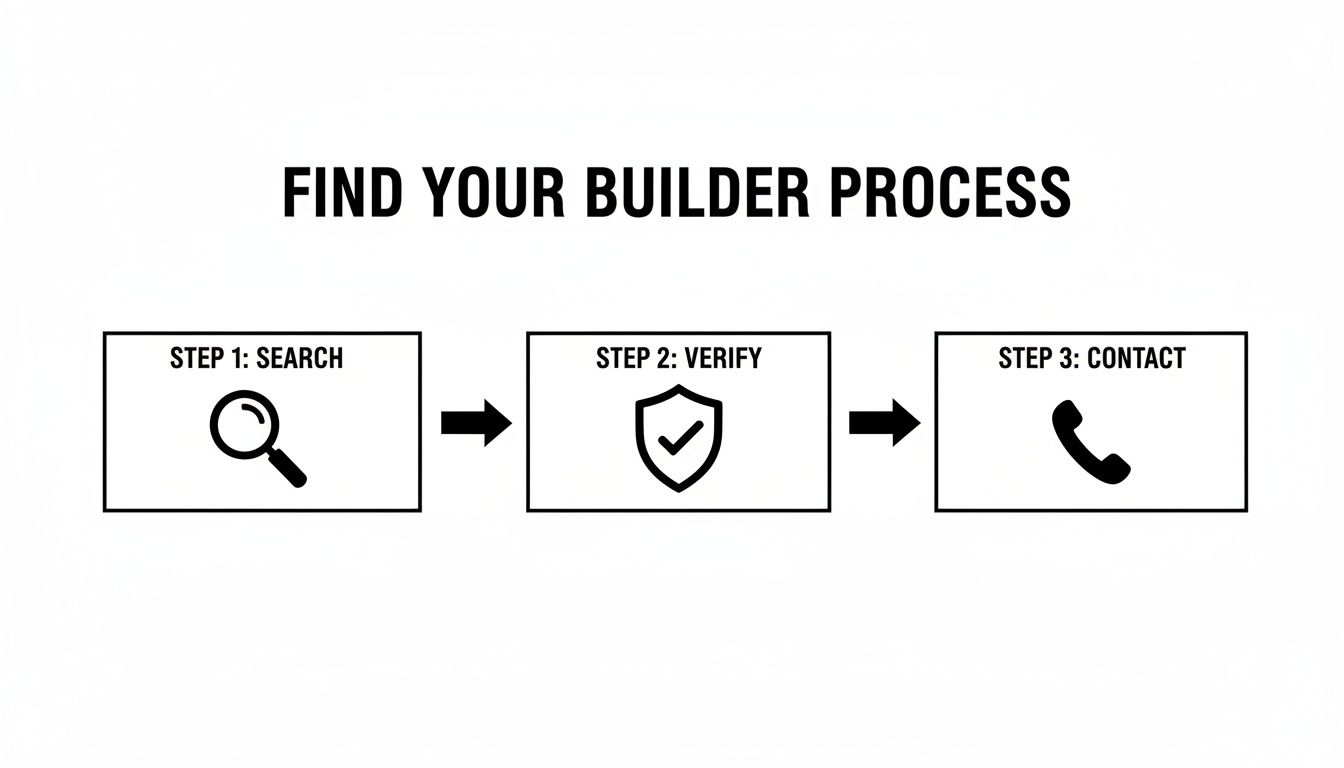
Moving from a wide search to verifying the details is the most crucial step before you even think about picking up the phone.
Do Your Online Detective Work
Never, ever take a builder’s claims at face value. A good builder will actually expect you to check up on them and should make it easy to find their credentials. Think of this as your non-negotiable homework.
First, grab their Licensed Building Practitioner (LBP) number. Head straight to the official LBP public register and plug it in. This free search instantly tells you if their licence is current and, importantly, if they have any disciplinary actions on their record. If a builder can't provide a valid LBP number, they can't legally carry out most deck work that requires a consent. Full stop.
Next, it’s worth a quick check on their business stability. A search on the New Zealand Companies Office register shows you how long they’ve been operating and confirms the company is solvent. A long, steady history is usually a great sign of a reliable outfit.
Make Sure They’re Insured
This is your absolute safety net. You need to ask every single builder for a copy of their current public liability insurance certificate. Look for coverage of at least $1 million, though we’re seeing $2 million become the standard for good reason.
Don't just ask if they have insurance; ask for the certificate itself. This single piece of paper is what protects you if they accidentally damage your house, your neighbour’s fence, or worse, if someone gets injured on site. Without it, you could be the one left with the bill.
Check that the policy is still valid and the coverage amount is suitable for a project of your scale. It’s a small step that can save you from a massive financial headache down the line.
Learn to Read Between the Lines of Reviews
Online reviews are a fantastic resource, but you have to know how to interpret them. Forget the star rating for a moment and dive into the actual comments on sites like NoCowboys.
Hunt for Specifics: A review that just says "great job" is nice, but not very useful. You want the ones that mention specifics—comments about great communication, how tidy the team was, their knack for problem-solving, or how they stuck to the original quote are far more telling.
Look for Consistent Themes: Are multiple reviewers praising the same site foreman? Does the theme of professionalism and punctuality pop up again and again? Consistent feedback across different projects points to a company that has its processes dialled in.
See How They Handle Problems: Let’s be realistic—things can go wrong on any building project. The real test is how a builder reacts. Look for reviews that describe an unexpected issue and how the company dealt with it. A builder who communicates clearly and finds a fair solution is exactly who you want on your team.
When you're trying to find the best local deck builder, this deeper dive helps you spot potential red flags and build a list of genuinely qualified, trustworthy professionals who are right for your Auckland home.
Asking the Right Questions During Your On-Site Consultation
The on-site meeting is more than just a chance for a builder to measure up and give you a price. Think of it as a two-way interview. You're sizing them up, and a good builder is sizing up the job. This is where you separate the true professionals from the rest.
Pay close attention to how they communicate. Are their answers clear and confident, or do they give you vague, "she'll be right" responses? How they handle your questions now is a strong indicator of how they'll handle your project later.
Project Management and Communication
Picture this: the wrong timber has been delivered, and the crew on-site has no idea who you're meant to talk to. It’s a frustrating and completely avoidable scenario. That’s why your first line of questioning should be all about process and communication.
Start with the most important question: "Who will be my single point of contact from start to finish?" If the answer involves you chasing three different people for updates, that’s a red flag. You want one dedicated project manager or lead builder who owns the project and is your go-to for everything.
Then, dig into how they actually run their projects:
- How often can I expect an update on progress? A daily text or a quick end-of-week summary call shows they’re organised.
- What’s the plan if you run into something unexpected? Think hitting solid rock during excavation or finding rot in the house framing where the deck will attach.
- How do you handle changes to the plan once work has begun?
A seasoned pro will have a clear system for dealing with these real-world building challenges. An amateur will just shrug and say they'll "figure it out," which usually means more stress and cost for you.
Materials and Local Knowledge
The materials you choose will dictate your deck’s lifespan, how much time you spend maintaining it, and of course, how it looks. A good builder should be your expert guide here, making recommendations based on Auckland’s unique, often demanding, climate.
The building industry in our region is incredibly active. Residential building consents in Auckland recently hit a record 15,617 in a single year, a 12% increase that shows just how many people are investing in their properties. This boom means the best deck building companies near me, like our team at Reports and Repairs, are constantly dealing with supply chains and know which materials perform best locally. If you're interested, you can read more about New Zealand's construction outlook to get a sense of the market.
Test their expertise with a few pointed questions:
- Where do you source your timber from? Can you confirm it's from a sustainable source, like FSC-certified pine?
- Given Auckland’s sun and rain, what specific composite decking brands have you had the best results with and why?
- What kind of fasteners and hardware do you use? Are they properly rated to prevent rust and stand up to our coastal air?
An expert won't just push the most expensive option. They'll walk you through the pros and cons of treated pine versus durable hardwoods or composites, always connecting it back to your budget, how much maintenance you’re prepared to do, and your home’s specific environment.
Consents and Compliance
This is non-negotiable. A builder who is even slightly hazy on Auckland Council regulations is a massive risk. Getting this wrong can lead to serious legal and financial trouble down the track, including being forced to tear your new deck down.
Ask them directly: "Under what specific conditions would my deck project require a building consent?"
A competent builder should immediately mention the obvious triggers, like being more than 1.5 metres off the ground. But a great builder will also bring up the finer points of the Auckland Unitary Plan, like site coverage rules, how close you can build to your boundary, or if your deck might fall into a flood plain overlay.
Your next question should be, "If we do need consent, what's your process for managing the application?" They should have a clear, tried-and-true system for handling all the paperwork with the council. This shows they’re not just a labourer but a true professional who will ensure your project is 100% compliant from start to finish.
Understanding Timelines, Materials, and Consents
Getting a new deck is exciting, but a successful build hinges on three things: a realistic timeline, the right materials for our Auckland weather, and getting the council paperwork sorted.Nailing these details from the get-go is what separates a smooth, enjoyable project from a stressful one that blows your budget. It all starts with asking your builder the right questions.
So, how long should it actually take? If a builder gives you a vague "she'll be right" answer, that’s a big red flag. An experienced crew that has their systems dialled in can give you a pretty clear schedule.
Once any consents are approved and the timber is on site, a professional team can often get a standard residential deck built in 7 to 14 days. A timeline like this tells you they’re efficient, they have their project management sorted, and they respect your time.
Choosing Your Decking Materials
The material you pick is easily the biggest decision you'll make. It dictates how your deck looks, what it costs, and how much weekend time you’ll spend maintaining it over the years. With Auckland’s harsh sun and damp winters, this choice is critical.
A good builder should walk you through the options, but it helps to know the main contenders yourself.
- Treated Pine: This is the classic, affordable choice for a reason. It's readily available and, when treated to the right level (H3.2 or higher), it stands up well. Pine is a fantastic, cost-effective base, especially if you plan on staining it to match your home's colour scheme.
- Hardwoods (e.g., Kwila, Vitex): If you want a premium look and superior durability, hardwoods are the way to go. These timbers are naturally more resistant to rot and insects but do come with a higher price tag. They need a good oiling every so often to keep their rich colour, otherwise, they'll gradually fade to a silvery grey.
- Composite Decking: For the ultimate "set and forget" option, you can't beat composites. Made from recycled plastic and wood fibres, they won't fade, stain, or rot. You’ll never have to oil or paint them. The upfront cost is higher, but when you factor in the money and weekends saved on upkeep, it’s an investment that often pays for itself.
Here's a good sign: a builder who talks about sourcing eco-smart materials. Whether it's FSC-certified pine or composites with a high recycled content, it shows they’re thinking about the bigger picture, not just the job at hand.
Demystifying Auckland Council Consents
The word "consent" can sound a bit daunting, but it's just the council’s way of making sure your deck is safe, sound, and legally built. A top-tier builder will make this whole process painless and handle the admin for you.
The most important thing to realise is you can’t just assume your project is exempt from needing one.
While many people think a deck under 1.5 metres high doesn't need consent, that's only part of the story. The Auckland Unitary Plan has very specific rules about site coverage and how close you can build to your boundary. A great builder will know these local nuances inside and out.
If your project does need consent, your builder should be managing the entire thing for you. This means they’ll get the drawings and documents ready and lodge the application with Auckland Council on your behalf.
Frankly, this service is a huge part of the value you get when hiring professional deck building companies near me. It keeps you compliant and saves you from massive headaches down the line. If a builder seems reluctant to handle the consent process, consider it a deal-breaker.
Spotting Red Flags Before You Hire

Finding the right deck builder is only half the battle; the other half is spotting and dodging the wrong ones. A few early warning signs can save you from a world of headaches, budget blowouts, and a deck that doesn't last. Always trust your gut—if something feels off during your first chat, it probably is.
One of the biggest red flags is any kind of high-pressure sales pitch. A good builder respects your decision-making process. They won’t push you to sign on the spot or demand a massive cash deposit to "lock in" a supposedly special price. That's a classic cowboy tactic.
Vague Quotes and Fuzzy Details
An honest, professional quote should be clear and detailed. If you get a quote that’s suspiciously cheap or just a single number scrawled on a piece of paper, be very cautious.
Here’s what a weak quote often looks like:
- A single "lump sum" price: You get one figure with zero explanation of what it actually covers.
- Vague material descriptions: The quote might say "pine decking" but won't specify if it's premium or dressing grade, or mention the treatment level. Details matter.
- Hidden or unmentioned exclusions: What about skip bin hire, rubbish removal, or the cost of digging foundations? If it’s not listed, you can bet it will be an extra charge later.
A fuzzy quote is a builder's way of leaving the door open to hit you with extra costs for things you assumed were included. It’s a sign of poor planning at best and outright dishonesty at worst.
Communication and Compliance Issues
Pay close attention to how a builder communicates. Do they listen to your ideas and answer your questions clearly, or do they seem evasive and dismissive? A true professional will be happy to talk through the finer points.
Be especially wary if they get cagey about council consents. If a builder tries to downplay the importance of getting a consent from Auckland Council, that’s a massive red flag. You might hear lines like, "Don't worry about it, she'll be right" or "No one will ever know." This is your cue to walk away, fast. Building without the required consent can lead to fines and even an order to tear the whole thing down.
A great builder sees the consent process as a mark of quality. It’s not a hurdle for them; it’s a way to ensure the final structure is safe, compliant, and adds real value to your home. They’ll be confident in navigating the system, not avoiding it.
Finally, if a builder can’t or won’t give you recent, local references you can actually speak to, you have to wonder why. Any builder proud of their work will have a list of happy clients ready to go. An inability to provide them is one of the clearest signals that you should keep looking.
Your Top Questions About Building a Deck in Auckland
When you start thinking about adding a deck, the questions come thick and fast. It's a big investment, so that's completely normal. We hear these same queries from homeowners all over Auckland, so let's clear up a few of the most common ones.
How Much Should a New Deck Cost in Auckland?
This is the big one, isn't it? The honest answer is: it varies. Anyone giving you a single, ballpark figure over the phone without seeing your property is a major red flag.
As a rough guide for 2024, you can expect a standard treated pine deck to cost somewhere between $450 and $700 per square metre. If you're looking at premium options like a rich hardwood or a modern, low-maintenance composite, that figure will likely be closer to $800 to $1,200+ per square metre.
A professional quote won't just be a single number. It will be a detailed breakdown showing you exactly where your money is going, from materials to labour. This kind of transparency is worth far more than a cheap estimate that suddenly balloons with "unexpected" costs.
Do I Actually Need a Building Consent for My Deck?
It's a classic "it depends" situation, and this is where a builder's local knowledge is absolutely vital. The general rule of thumb is that a building consent isn't required for a deck under 1.5 metres in height.
But—and it’s a big but—the Auckland Unitary Plan has its own set of rules. Things like how much of your section is already covered by buildings or how close your deck will be to the boundary can trigger the need for a consent, no matter the height.
A good Licensed Building Practitioner (LBP) lives and breathes these local rules. They won't just recite the 1.5-metre guideline; they’ll ask the right questions about your property to know for sure if your project is exempt or if they need to manage the consent process for you. It's about keeping your project fully compliant and avoiding headaches down the track.
What is an LBP and Why Does it Matter?
LBP stands for Licensed Building Practitioner. Think of it as a government-backed seal of approval. It proves a builder has been formally assessed and is considered competent to handle work that's critical to your home's safety and structure.
For any "Restricted Building Work"—which includes most decks that do require a consent—you legally must use an LBP. Hiring one isn't just about ticking a box; it gives you real protection.
- You have recourse. LBPs are accountable for their work and can face disciplinary action if things go wrong.
- It's a mark of quality. The licence is proof of their experience and commitment to their trade.
- Your build is guaranteed to be up to code. They know the Building Code inside and out, protecting your investment and ensuring its legal status.
How Long Will it Take to Build?
If a builder is vague about the timeline, it often means they're disorganised. Once consents are sorted and all your materials are on-site, the actual build for a standard residential deck is surprisingly quick.
A good professional crew can usually get a typical deck built within 7 to 14 days. Of course, if your project is more complex—built on a steep hill, needs a lot of earthworks, or has fancy features like built-in seating—it will naturally take longer. A reputable builder will always give you a clear project schedule in writing, so you’re never left wondering what’s happening next.
Ready to turn that vision for your perfect outdoor space into a reality? The team at Reports and Repairs combines LBP-certified expertise with a deep understanding of Auckland's building requirements. We handle everything from design and consenting to a fast, professional build, ensuring a stress-free process and a beautiful result you'll enjoy for years. Contact us today for a detailed, no-obligation quote by visiting https://www.reportsandrepairs.co.nz.