Here in Auckland, we live for the outdoors. It’s part of our DNA. So it’s no surprise that a great outdoor area isn't just a nice-to-have; it's central to our lifestyle and adds real value to our homes.
More and more, Aucklanders want to do more than just step outside—they want to truly live outside. They’re looking to extend their living rooms into the garden, create proper spaces for entertaining, and make the most of our incredible climate. This is where decks and pergolas come in, but it's important to know they serve two very different purposes.
What's the Difference? Decks vs. Pergolas
Think of it like building a room. A deck creates the floor, while a pergola creates the ceiling.
A deck is your foundation—the solid ‘stage’ for your outdoor life. It gives you a stable, level platform for the barbecue, your sun loungers, or a dining table where you once had a sloping, unusable patch of lawn.
A pergola, on the other hand, is the architectural 'ceiling'. It defines the space from above, provides welcome shade with filtered light, and gives climbing plants a structure to create a beautiful, green canopy.
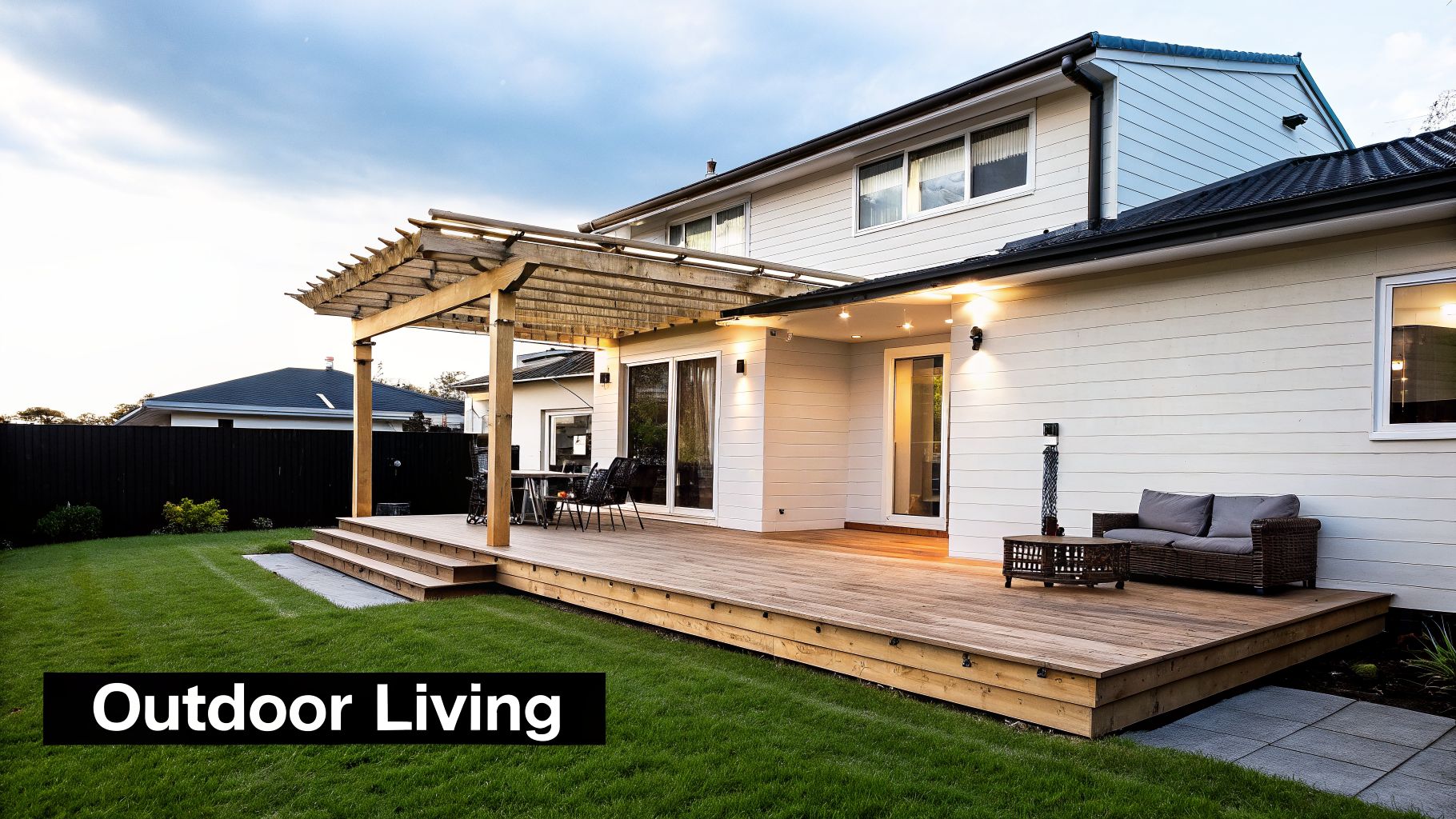
Put them together, and you get the best of both worlds: a perfectly defined outdoor room that blends function and style.
Getting It Right From the Start
Before you even think about ordering timber or digging post holes, a bit of careful planning is essential. A great result comes from knowing your options and, crucially, understanding the local rules.
We'll walk you through the key things you need to nail down:
- Matching the structure to your property: We'll help you figure out if a deck, a pergola, or both is the right fit for your section and how you want to live.
- Navigating Auckland Council compliance: It’s vital to know when you need a building consent. Getting this wrong can be a costly headache, so we'll make sure you know the rules.
- Choosing the right materials: You need materials that look good, last well in Auckland’s climate, and fit your budget. We'll cover the pros and cons of different options.
Taking the time to plan properly means you can build with confidence, knowing your new outdoor space will be a safe, compliant, and beautiful addition to your home for years to come.
Deck or Pergola: Which Is Right for Your Home?
Deciding between a deck and a pergola can feel like a big choice, but it gets a lot clearer when you boil it down to their fundamental purpose. The easiest way I explain it to homeowners is to think of building an outdoor room from the ground up: the deck is your floor, and the pergola is your ceiling.
A deck is all about creating a solid, usable floor where you currently don't have one. It’s the perfect answer for that sloped, bumpy, or boggy patch of lawn you can't do anything with, turning it into a beautiful, level platform for outdoor living.
A pergola, on the other hand, is about defining the ceiling of your outdoor room. It gives you structure, provides dappled shade without casting your space into darkness, and creates a real sense of destination over an existing patio or, you guessed it, a new deck.
When to Choose a Deck
Essentially, a deck is your go-to when you need to create brand-new, flat, and functional space. It's less about shade and all about the foundation.
You should seriously consider a deck if:
- You're dealing with a sloping section: So many Auckland properties are on a bit of a slope. A deck is the perfect solution, creating a level surface that makes a once-unusable area perfect for an outdoor dining table or a couple of comfy chairs.
- You want a seamless indoor-outdoor flow: Building a deck at the same height as your interior floor makes your living room or kitchen feel like it just keeps on going, right out into the garden. It’s a classic for a reason.
- You need a dedicated spot for outdoor life: If you're picturing a stable platform for the barbie, sun loungers, or a safe play spot for the kids, a deck provides that solid, reliable ground you need.
Think of a deck as your outdoor stage. It elevates your activities, providing a dedicated and stable platform for everything you want to do outside, from hosting a summer barbecue to simply enjoying your morning coffee.
When to Choose a Pergola
A pergola is what you turn to when you already have a good outdoor floor—like a concrete patio, pavers, or an existing deck—but want to make it a more comfortable and inviting space.
A pergola really shines in these situations:
- You need a break from the harsh sun: A pergola’s slatted roof offers filtered sunlight. It’s that perfect middle ground, giving you comfortable shade without making the whole area feel dark and closed-in.
- You want to define an "outdoor room": Just by adding posts and an overhead structure, a pergola creates a strong visual boundary. It’s what turns a simple patio into a deliberate, welcoming outdoor lounge.
- You're a fan of climbing plants: Nothing looks better than a pergola draped in beautiful climbers like wisteria, bougainvillaea, or grapevines. It provides the perfect framework to create a stunning living, green canopy.
The Best of Both Worlds: A Deck and Pergola Combination
Of course, for the ultimate outdoor living area, you don't have to choose. A deck and pergola together is a hugely popular and effective combination here in Auckland.
Why? Because it solves both problems at once. The deck gives you the fundamental space, and the pergola adds the overhead style, shade, and architectural interest.
Building a pergola over your deck creates a complete, beautifully defined outdoor room that truly feels like an extension of your home. You get the solid floor you need for all your activities and a gorgeous "ceiling" that provides shelter and atmosphere. It’s the pairing that unlocks the absolute full potential of your backyard.
Navigating Auckland Council Consents for Your Project
So, you're ready to build a new deck or pergola. It’s an exciting step, but here in Auckland, there’s a bit of homework to do first. It's a common myth that you can just build whatever you want in your own backyard. In reality, many outdoor projects need a building consent to be legal.
Getting this part wrong isn't a small mistake. It can come back to bite you with council fines, orders to tear down your new structure, or major headaches when you try to sell your home down the track. But don't worry, once you understand the key triggers, the rules are actually quite straightforward.
When Do You Need a Building Consent?
Whether you need a building consent for a deck or pergola usually comes down to height and size. It’s not just about the structure's footprint; it’s about safety and its potential impact on your property and neighbours.
For decks, Auckland Council will almost certainly require a building consent if:
- Any part of the deck's floor is more than 1.5 metres above the ground.
- It’s going to act as a barrier for a swimming or spa pool.
For pergolas, you'll likely need consent if:
- The roof covers an area larger than 30 square metres.
- You’re planning a solid, waterproof roof instead of open rafters or battens.
The bottom line is simple: height, size, and what you’re using it for are what count. Once you cross these thresholds, your project shifts from a simple weekend job to a regulated build that needs official sign-off.
This visual guide can help you think through the first step—whether you’re aiming to create a whole new outdoor room or just add some much-needed shade.
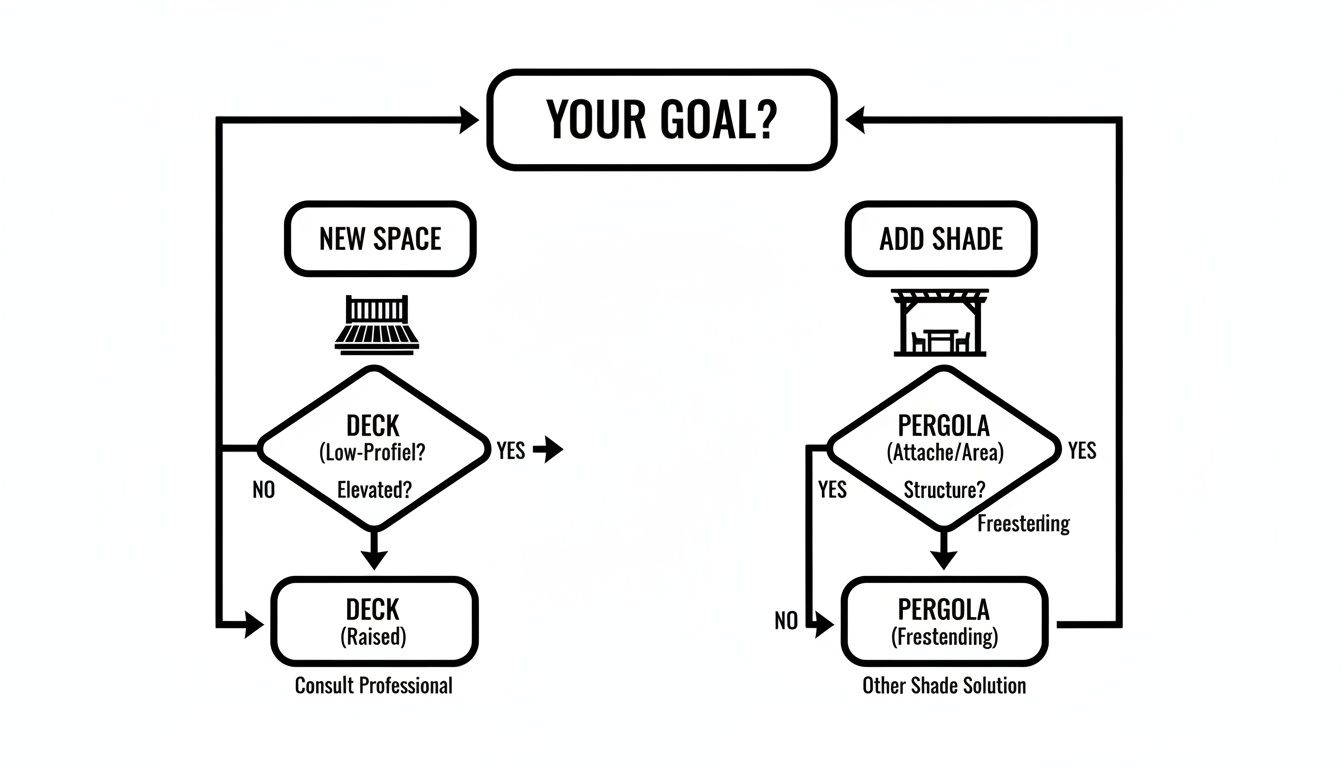
As you can see, if a new, usable space is the goal, a deck is your answer. If shade is the priority, a pergola is the way to go.
The Value of Professional Guidance
Auckland is booming, and the demand for more living space is huge. In the year ended December 2025 alone, a massive 15,617 new home consents were issued—a 12% jump from the previous year. This construction surge makes it even more important to have an expert on your side who knows the council's processes inside and out. You can discover more insights on New Zealand's construction trends from Stats NZ.
This is exactly where a Licensed Building Practitioner (LBP) proves their worth. A good LBP, like our team at Reports and Repairs, does more than just swing a hammer. They’re your guide through the maze of council paperwork, ensuring your application is lodged correctly the first time to avoid frustrating and expensive delays.
Even more importantly, a professional protects the integrity of your home. When a deck is attached directly to the house, weathertightness is everything. A poorly installed ledger board can act like a funnel, directing rainwater straight into your wall framing. This leads to rot and structural damage that can cost a fortune to fix. An expert ensures every connection is properly sealed and flashed, protecting your biggest asset from harm.
Choosing Materials for Style and Longevity
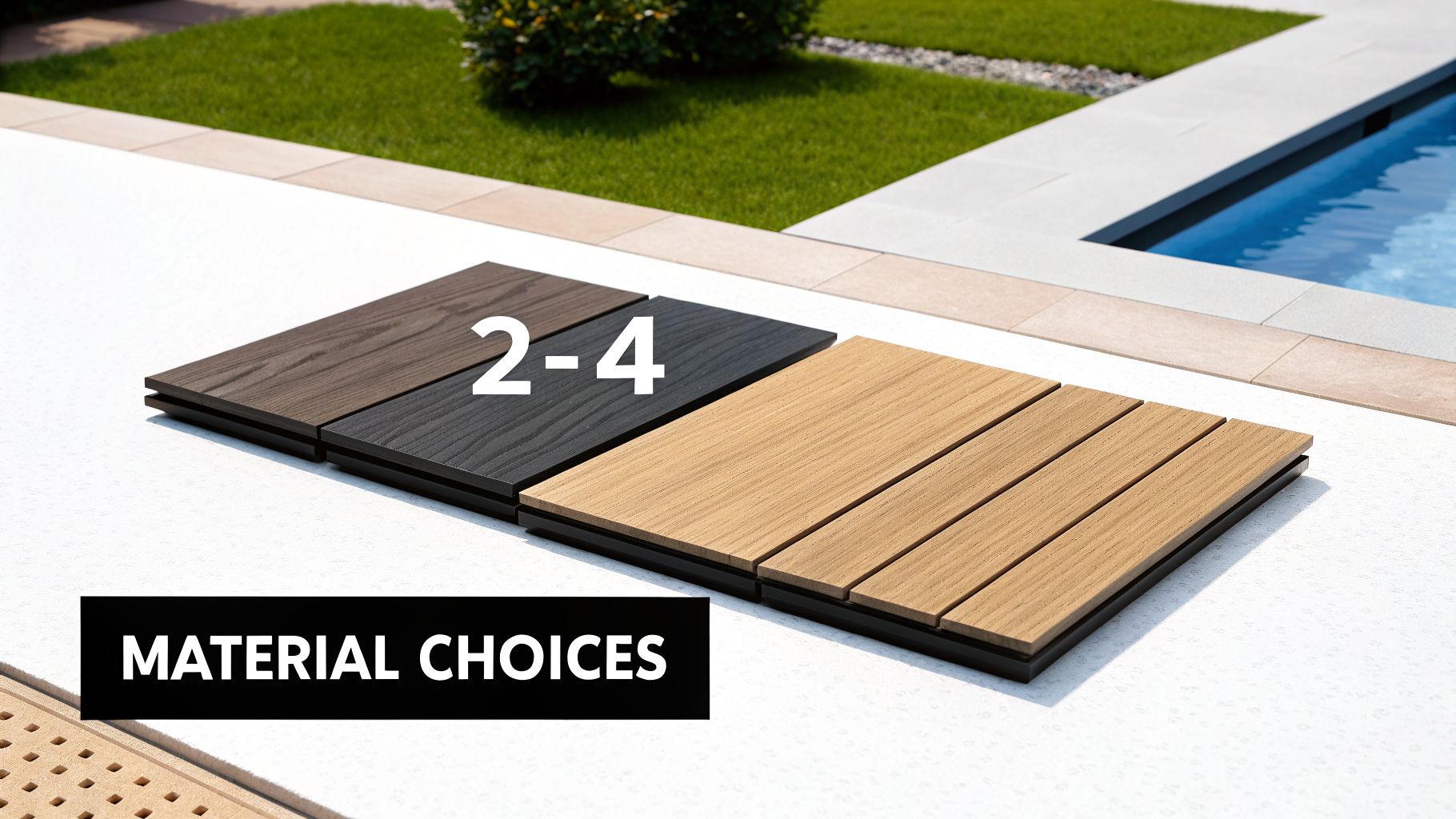
Picking the right materials for your deck and pergola is about more than just looks. It’s a real balancing act between the style you want, what your budget allows, and how much of your weekend you’re willing to spend on upkeep. Here in Auckland, with our sun and salt-laced air, durability is king.
For most of us, timber is the go-to. It has a natural warmth and texture that just feels right underfoot. But not all timbers are created equal, and your choice here will absolutely dictate how much maintenance is in your future.
Popular Decking Materials
-
Treated Pine: This is hands-down one of Auckland's favourite decking materials, and for good reason—it’s affordable. When treated to the right standard (H3.2 or higher), it stands up well to the elements. The trade-off? It requires consistent maintenance. You'll need to get friendly with a paintbrush, as it needs regular cleaning and re-staining every couple of years to keep moisture and UV damage at bay.
-
Hardwoods (like Kwila): If you're after a more luxurious finish, hardwoods are hard to beat. They are incredibly dense, with rich, deep colours and a natural resistance to rot and insects that pine just can't match. The upfront cost is higher, though. A heads-up on Kwila: it’s famous for "leeching" a reddish-brown tannin when it's new, which can easily stain concrete or tiles below if you're not careful.
-
Composite Decking: This is the modern, low-maintenance hero. Made from a clever blend of recycled plastic and wood fibres, composite boards are built to resist rot, fading, and pests. While you’ll pay more to get it installed, you’ll save a huge amount of time and money in the long run.
Think of composite decking as the "set and forget" option. It gives you a clean, consistent look year after year without the annual staining ritual. That means more time enjoying your weekends, not working on them.
Of course, a deck is just one part of your outdoor space. If you're building around a pool, for example, the surrounding surface needs special attention. You can check out some of the best pool deck stone options to see how different materials handle that unique, wet environment.
Pergola Material Options
When it comes to the pergola overhead, you’ll want a material that complements both your house and your new deck. It’s often a good idea to go with something lighter, as it reduces the structural load on the deck itself.
-
Treated Pine and Cedar: Both are fantastic timber choices. Pine is versatile and won't break the bank, while cedar gives you a stunning natural look, a beautiful scent, and is naturally insect-resistant.
-
Aluminium: For a sharp, modern look, you can't go past aluminium. It's surprisingly lightweight but incredibly strong, and since it won't rust or rot, it’s about as low-maintenance as you can get.
A quick note on sustainability: always look for FSC-certified timber. This certification is your guarantee that the wood was sourced from responsibly managed forests. On a similar note, many composite products are made from recycled materials, making them a great eco-friendly choice. It’s all about finding that sweet spot where great looks meet a material that suits your lifestyle.
Getting a Handle on Project Costs and Timelines in Auckland
So, how much is this going to cost, and how long will it all take? These are usually the first questions on every Aucklander’s mind when they start dreaming about a new deck or pergola. The honest answer is: it depends.
The final price tag isn't just one figure; it's a combination of different factors. Getting your head around these will help you set a realistic budget and see exactly where your investment is going. The main things that will shape your costs are the size of the project, how complex the design is, and, of course, the materials you choose.
The Key Factors That Drive Your Budget
First up, the site itself makes a huge difference. Building on a flat, easy-to-access spot in a suburb like Mount Eden will always be more straightforward and cost-effective. If you're on a sloping section in the Waitākere Ranges, on the other hand, you'll likely need more extensive foundation work and specialised gear, which adds to the cost.
Your choice of materials is the next big decision with a major impact on the budget.
- Standard Pine Deck: This is the go-to for many people looking for an affordable option. Pine costs less per square metre upfront but will need regular staining and maintenance to keep it looking good.
- Premium Composite Deck: While you’ll invest more initially, composite materials save you a lot of time and money in the long run. They are incredibly durable and need very little maintenance.
Finally, if your project needs a building consent, this will add to both the cost and the timeline. There are council fees to pay and detailed plans to submit. A good building team can handle all this for you, but it’s a non-negotiable step that needs to be factored in.
Thinking about costs and timelines isn't just about the build itself. It’s about understanding the entire journey, from the first design sketch to the final handover, ensuring there are no surprises along the way.
It's also worth keeping an eye on the wider construction market. Recent figures show New Zealand's residential building sector stabilised in late 2025, with a 2.8% quarterly increase in new work. For homeowners and investors across Auckland, especially on the North Shore or in West Auckland, this is an interesting time. Industry audits suggest that 20-30% of older decks have weathertightness issues, which often need an LBP inspection for insurance claims. In the current market, efficient teams can often provide sharp pricing and quick turnarounds for these essential repairs. You can read more about the recent NZ construction recovery here.
What Does a Typical Project Timeline Look Like?
A well-organised project should follow a clear path to minimise disruption to your daily life. Here’s a typical breakdown:
- Initial Consultation & Design: (1–2 weeks) This is where we sit down with you, listen to your ideas, measure everything up, and nail down a final design.
- Council Consent Lodgement (if required): (3–6 weeks) This part is largely in the hands of Auckland Council, and the timing can vary depending on how busy they are.
- Construction Phase: (1–2 weeks for standard projects) Once all the paperwork is approved, a good team can get the actual build done surprisingly quickly.
Following this structured process means we can get your new deck or pergola finished within a predictable timeframe, letting you get back to enjoying your transformed outdoor space without any unnecessary stress.
Why a Professional Builder Is Your Best Investment
It’s easy to get excited about building a new deck or pergola. You can see it in your mind's eye. But getting from that brilliant idea to a finished structure that’s safe, legal, and beautifully built is a massive leap. While the Kiwi DIY spirit is strong, bringing in a professional is probably the single best decision you can make for your project.
This is about so much more than just getting someone to swing a hammer. When you hire a professional team, especially a Licensed Building Practitioner (LBP), you’re buying expertise and, frankly, a whole lot of peace of mind. Think of them as your guide through the maze of building in Auckland.
The Real Value of an Expert
Hiring a pro isn't just another cost—it's an investment in doing the job right the first time. Here’s what that actually means for you:
-
They Guarantee It’s Up to Code: An LBP is legally on the hook for their work. They know the New Zealand Building Code inside and out and make sure every detail, from the depth of the post holes to the height of the handrails, is fully compliant.
-
They Handle the Council Headaches: If your project needs a building consent—and many do—a good builder takes care of it all. They’ll draw up the plans, lodge the application with Auckland Council, meet the inspectors on-site, and see the paperwork through to the end. This alone can save you months of stress and frustration.
-
Proper Craftsmanship Where It Counts: Pros know how to build for Auckland’s damp and changeable weather. They get the critical details right, like creating a perfect weathertight seal where a deck ledger board attaches to your house. A small mistake here can cause a slow, hidden leak that rots your framing, leading to tens of thousands of dollars in repairs years later.
A professional builder doesn’t just put up a structure; they give you confidence. They take full responsibility for the structural integrity, legal compliance, and finish quality, ensuring your deck or pergola is a safe, beautiful space for years to come.
At the end of the day, hiring an expert protects the value of your biggest asset: your home. A dodgy, unconsented deck can become a huge red flag when you decide to sell. A professionally built outdoor area, however, is a genuine asset that adds immense value to your property and your lifestyle.
Your Deck and Pergola Questions, Answered
When you're planning a new outdoor space, a lot of questions naturally come up. We hear them all the time from homeowners across Auckland, so we've put together some straight answers to the queries that pop up most often.
How High Can I Build a Deck Without Consent?
This is a big one. In Auckland, the magic number is generally 1.5 metres – you can usually build a deck up to this height from the ground without needing a building consent.
But hold on, it’s not quite that simple. The deck also has to be a safe distance from your property boundaries, and if there’s a risk of falling, you’ll need compliant balustrades. The rules can be surprisingly tricky, which is why it’s always best to chat with a Licensed Building Practitioner (LBP) to make sure you’re on the right side of the law.
What Is the Best Low-Maintenance Deck Material?
If you’d rather spend your weekends enjoying your deck than staining it, composite decking is hard to beat. It’s an incredibly popular choice for a reason. Unlike timber, it doesn't need constant upkeep to protect it from the weather.
It's specifically designed to resist:
- Rot and moisture damage
- Borer and other insect infestations
- Fading from Auckland's harsh sun
Yes, the upfront cost is higher than for standard treated pine, but you get that time back over the long run. The savings on maintenance products and labour make it a smart investment for busy Aucklanders.
The real payoff with composite decking is that you get to spend your weekends relaxing on your deck, not working on it. For many homeowners, that trade-off is worth every cent for the lifestyle it gives them.
Can I Attach a Pergola to My House?
Absolutely. Attaching a pergola directly to your house is a great way to create a seamless indoor-outdoor flow. However, this is one of those jobs that has to be done perfectly.
The connection point, called a ledger board, must be flawlessly flashed and sealed. If it isn't, water can get behind the cladding and into your home's framework, causing serious and expensive weathertightness problems down the track. This is definitely a task for an experienced professional who knows how to get it right.
Ready to get clear, expert answers for your specific project? The Reports and Repairs team is here to help you navigate every step, from design and material choices to council compliance. For workmanship you can trust, visit us at https://www.reportsandrepairs.co.nz.